Friday, May 3, 2024

May 2024: Smithy's Taking A Break

So this is a quick update: the blog will be lying dormant for a month.  I haven't written a new blog post in six weeks and I have exhausted all articles I've kept in reserve. I don't have any new content ready, and if I'm being honest, I'm not really interested in doing any more right now.

Relatedly, I am taking a break from chess.  I won't be studying, reading, watching or checking anything.  This month felt like a struggle, like chess was something I was forcing myself to do rather than something I wanted to do because, you know, it's a fun game.  I need to pause and take a step back to make this is something I want to be doing.

So, for those reasons, I'll be stepping away from both the board and the keyboard for May.  If I come back more in tune with this game, great, let's get going.  If it doesn't, great, then I know I'm focusing on worthwhile things instead.  Thanks for understanding. 

Monday, April 29, 2024

Improvement is not the same as Enjoyment

 I've written a lot about chess improvement.  I have theories, suggestions, ideas and my own training plan. Getting better at chess drives me forward.  I am not alone here.  The Internet is filled with forums and videos all offering solutions on how to improve.  It's a worthy and noble pursuit.  I endorse it... but...

Improvement is not the same as enjoyment.  Getting better at chess does not necessarily mean you will like it more. It might actually do the opposite.

I remember one game in particular; it's the first game featured in my "Smithy's Minis" course, actually. I saw a check with my Queen and thought it was crushing ... one move stopped it.  Oops.  Then I dropped a piece, but my opponent dropped one right back.  The rollercoaster went up and down, back and forth, and then suddenly, magically, I had a winning attack.

I didn't know what was happening.  I was going along, playing one move at a time, completely lost in the magic.  I didn't plan ahead; I couldn't, I wasn't strong enough.  It was just one move at a time, so all the tactics literally appeared out of the blue.  I didn't know when I was losing and I didn't know I was winning until the end.

Not just this game, but every game.  It was a thrill.  I didn't know any better, so it was magic, pure magic.  I reveled in the mystery of victory and defeat. I played each game with a sense of wonder.

I have since gained over 800 rating points since that game, but I never enjoyed chess more than during those early 1400 days.

Wednesday, April 24, 2024

Chess Keystones: Smithy's Deep-dive into Calcuation

Since starting my new career, I have read a lot of business- and leadership-related content.  One idea that has popped up several times is that of a "keystone," or the single most important activities related to your field.  In my area of law, reading new caselaw and networking are those activities.  I can have the best precedent documents and write amazing emails and have a killer support staff, but none of that matters if I don't know the law and don't have clients to serve.  Time spent here is never wasted.

In chess, and likely most other fields, a similar dynamic applies.  There are dozens of things that affect our game and influence our result, but a core few influence the vast majority of our games.  It's not hard to guess, either.  It's calculation.  GM Shankland, 2700+ grandmaster and author and top 22 or so in the world, says that nothing else matters until about 2300 Fide.

In a previous blog post on 80/20 chess training, I suggested that calculation should be a mainstay in your chess training.  Duh.  Today, I want to focus solely on calculation training and emphasize the training aspect.  That is, there's a difference between doing calculation and training it.  This will explain that difference and give a guide path on what to do next.

Friday, April 19, 2024

The Draw Mentality

 You sit down across someone 300 ratings points lower than you.  What are you thinking?  Probably, "I'm going to win this game."  Now switch that person with an IM.  What are you thinking?  For a lot of people, it's something like, "I hope I can get a draw."

Is that really your goal?  Are you really satisfied with a draw?  Is that your ideal outcome?

Woohoo, I didn't win!

During my youth, I went to a lot of karate tournaments.  This often meant driving 2-3hrs, both ways.  You don't do that any say, "Gee, third place might be achievable."  No, I tried my damnedest to win.  I pulled out all the stops.  I trained hard for the last three months, I'm in the best shape I've ever been, and if someone is going to beat me, then they will have to freakin' earn it.

I didn't win a lot ... but sometimes I did.  And then it happened more often.  By the end of highschool, it was almost constant.  I set the bar high and I met it.  And let me tell you, karate is much more intimidating than a board game.  Oh no, I lost a pawn ... versus oh no, I got punched in the face.

If you sit down to play chess and aren't playing for a win, why are you playing chess? I mean that literally. I don't know why anyone would intentionally play for a draw.

Monday, April 15, 2024

Worrying About Forced Draws

When a new opening course is released, people ask lots of questions.  "Is it good for my rating?" or "Is it more tactical or positional?" are very common, as are, "What line do you recommend against the London?"  One of the most persistent questions, though, is a rather odd one: "Are there many forced draws?"

This question fascinates me.  There are people legitimately worried that an opening might lead straight to a draw, no discussion.  This drawish tendency is a make-or-break consideration, where some people will, apparently, not entertain an opening if a draw is even remotely possible. Like chemtrails, this is largely worrying about nothing.

If you are an amateur chess player, you have very little to worry about forced draws.

Wednesday, April 10, 2024

Am I Psychic? Predicting Moves Based on Psychology

If I had to name the thing I like most about chess ... it would probably be winning.  Winning feels really good.  A close second would be the joy of figuring out a hard problem.  There's something magical about working on a puzzle and then finding the key move that snaps everything into place.  That also feels really good.

That said, I can win at any game, and there are loads of intellectual puzzles to keep me busy.  Chess offers something else I find fascinating: a glimpse into the psychology of our opponents.  I can look at my opponent's moves and, frequently, predict what sort of player he is, what he wants to do, what his preferences and weaknesses are.  I can then use this prediction to inform my own strategies.

It doesn't work all the time, but anecdotally, it seems to work more often than not.  Winning is nice, but winning while figuring out the psychological make-up of your opponent, that is next level.  It reminds me of that old Bobby Fischer quote.

Today, I want to share one such game where, very early on, I predicted my opponent's psychology and then used it against him.  It's a nice game, I won in 18 moves, but more importantly, I felt like I won the mental battle long before he resigned.

Friday, April 5, 2024

If You Can't Beat 'em, Join 'em: Playing Openings You Hate

"Oh look, another London system..." your mutter to yourself, the joy already fading from your life.  "That's the third one today."  You contemplate playing the Englund Gambit, 1...e5, just to deny these no-life Londoners their favourite set-up.  Eventually you reach that familiar middlegame, where White has a grip on e5, a solid position with no weaknesses and you, as Black, have to work hard to make something out of it.  Worse, it always seems any mistake you make is immediately game-ending, whereas White never loses early.  It's not fair.  What a stupid opening... and I'm not just saying that because I have a losing record against it!

I should be thankful it's only 24 games, I guess...

This can apply to any opening.  As a kid, I hated playing against the Qxd5 Scandi.  It seemed like Black got a super-solid position with no risk.  I couldn't take advantage of the early Queen development, and my attacking moves never went anywhere.  Black remained solid and then slowly took over.  It didn't seem fair ... so I did the only sensible thing: I started playing the Qxd5 Scandi.  Hey, if you can't beat 'em, join 'em.

This was an excellent decision.  Not because the Scandi is a particularly good opening.  No, it's for the exact opposite reason: I didn't realize the downsides of the opening until I was on the other side.  Once I was faced with these problems, it opened my eyes.  The grass isn't always greener on the other side, and this knowledge empowered my White game.  The Qxd5 Scandi is now one of my better performing openings ... as White.

Today I want to go into this simple idea in a little more detail. It is an excellent training tool, and it may be the best way to truly learn and understand different structures in chess.  After all, nothing beats practical experience.

Monday, April 1, 2024

Smithy's Monthly Update: March 2024 (We're Back, Baby!)

For the first two months of 2024, I have done almost zero chess training.  I predicted in February that I would do much more this month.  I was right.  I effectively re-started chess, and it feels really, really good.  And I also managed to keep most of my life in balance as well, a real win-win.

Here's the breakdown.

[Edit: The glut of joke emails in my inbox has reminded me that today is April Fools.  Let assure you that, despite the unfortunate timing, this is legitimately my monthly update.]

Wednesday, March 27, 2024

Mastered the Basics? Then You're a Master

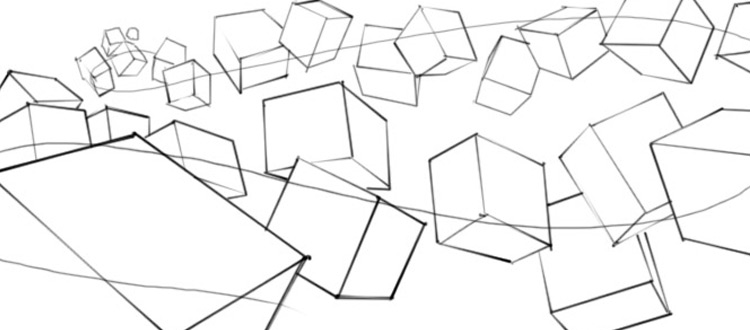
Whenever you learn a new activity, you will hear "study the basics" a lot, with "the basics" being the most important and fundamental skills.  Frequently, these are not sexy and even dull, such as artists drawing hundreds of boxes or musicians endlessly drilling their scales. There's nothing artistic about a cube or musical about a scale, but these form the necessary foundation that mastership can be built on.

And if you get good enough, even the basics become beautiful.

Source: https://conceptartempire.com/drawabox-lessons-review/
I have a blackbelt in karate.  Do you know how I stand out from a beginner?  It's not so much that I have "secret karate skills" that a white-belt hasn't learned.  Rather, I do the basics really well, and most blackbelt classes spend most of their time drilling the basics.  Indeed, most advanced karate skills are just the basics done in a certain way or with a slight variation.  After all, at the end of the day, there's only so many ways you can punch and kick someone.

This applies to chess.  Unlike karate, though, the basics of chess are truly vast.  Simply listing the basics will make this one of my longest blog posts.  Actually learning all of this will take even longer.  If you can do it, though, if you can truly internalize all of the basics, then there's a strong argument you are approaching master status.  Like a blackbelt, a chess master doesn't rely on "secret chess skills" to win so much as they do the basics really, really well.

Let's take a look at the chess basics.

Friday, March 22, 2024

Why I Never Played the Standard Beginner Openings

 If you are a beginner, you have probably heard the standard advice: "As Black, play 1.e4 e5, with a standard Italian or Spanish, and 1.d4 d5, playing the QGD against the Queen's Gambit."  These principled choices lead to stable yet rich positions where the basic principles will do you very well.  It makes a lot of sense... and I did not follow it.  Young Smithy did the exact opposite, actually.

I have mostly complete stats from when I was a kid up to the point in the mid-2010s when I started taking chess seriously again. Out of just under 900 Black games, here are the first move breakdowns:

Lots to dive in here (such as I have nearly played more Sicilians than I have against 1.d4 in its totality), but I should start with an immediate caveat: a lot of these games were thematic tournaments.  The King's Gambit, the Evans Gambit, the Max Lange, the Albin, a lot of these games started in set positions.  I loved playing these wild and open positions, so I signed up every chance I could.  I have no easy way of filtering these games out, so here's my best attempt: count how many times I reached the standard Italian (1.e4 e5 2.Nf3 Nc6 3.Bc4 Bc5 and not the Evans or Max Lange) and QGD (1...d5, 2...e6, 3...Nf6 and 4...Be7) positions.  These are the results:

The results?  I basically never played the standard openings.  I have one Italian (where I played 4.d3 f5!?, so not even a standard Italian!), two Spanish (both Berlins), and zero (!) QGD (though I did play the Cambridge Springs, which is a similar structure).  In my formative years, where I went from 1300 to 1800 in online correspondence chess, I did not play any of the standard openings.

Here's why.

Monday, March 18, 2024

Should Beginners Play the Sicilian?

 The Sicilian: it's what all the cool kids play.  It's the sharpest, most dynamic, most aggressive reply to 1.e4.  It has the best stats, the best win-rate, the fewest draws ... and the most theory.  A single inaccuracy, a slip in move order, leads to crushing attacks ... for either side.  It's probably the most interesting opening in all of chess.

So the question becomes, should beginners be playing the Sicilian?

At the risk of sounding like a lawyer, this will depend on what we mean by "beginner," "should", "play" and "the Sicilian."  I'm going to examine each one.  It will be more interesting than it sounds, I promise.

Wednesday, March 13, 2024

The Basics of Planning

 There are few things more frustrating in chess than not knowing what to do.  Take this position:

We're Black and we have a nice position: White's played a non-critical line, we have the two Bishops, equal space and no real weaknesses... but what do we do next?  Maybe ...Bg4?  But after White plays h3, we either exchange, losing the Two Bishop advantage, or retreat and likely end up on g6, where we stare at White's pawn wall.

That's not great.  Maybe ...Be6?  Okay, definitely a better spot for that Bishop, but now our Rook is blocked and our Bd6 is stuck defending e5 like a pawn.  That's not ideal, either.

Hmm, maybe we can ask a different question: which side of the board should we plan on?  We have more space on the Queenside, so maybe we keep pushing those pawns.  That looks decent.  The Kingside might also be an option: ...Nh4 and ...Bc5 create pressure, and maybe ...Bg4 now provokes some weaknesses.  That also looks tempting... but should I be doing any of these while most of my pieces are undeveloped?

This thought process goes round and round.  It's easy to get bogged down and never get anywhere.  We have an abundance of options that all look equally plausible.  Sometime we don't even recognize the options and we draw complete blanks. We stare at the board and nothing comes up.  We have no plan.

I would like to offer a solution, or at least a partial one.  When in doubt, focus on the most essential things.  These might not be "perfect" but are very rarely wrong.  From there, we can slowly add in more complex concepts.  Treat this as a basic introduction to planning.

Friday, March 8, 2024

Checklist for a Beginner's Opening Repertoire

Every beginner has heard this a thousand times: don't worry about opening theory, just learn opening principles.  That's great and all, and it's true ... but then you sit down at a game and have no idea what to do next.  It's literally move two and you are thinking on your own.  Is that really the right approach?

Of course not.  Having no repertoire is silly, but so is the other extreme, spending dozens of hours learning detailed theory.  There has to be a happy middleground, and there is.  I'm going to lay-out the elements of an ideal beginner's repertoire.  If a particular resource doesn't check all of these boxes, then it's probably not for beginners:

  1. Plan Based
  2. Pithy
  3. Principled

Monday, March 4, 2024

Learning Plans and Ideas

In chess, there are few things worse than not having a plan.  Every move is a struggle. We agonize over every decision, wondering if we are on the right track. Typically we drift, jumping from one idea to the next, with no consistency in our moves.  It's terrible.

When you have a plan, though, then life is easy.  Just follow the plan.  If we are doing a Queenside minority attack, well, then every move should address that.  Simple. We know exactly what we are supposed to do. Sure, we still have to calculate and evaluate and all that hard stuff, but our plan guides our thinking.  Having one is much better than the alternative.

This guy probably knows what he is talking about.

Okay, so we're probably in agreement, knowing plans (and their associated ideas) is ideal ... but how do we learn these?  Every pawn structure has its own general plans, and every opening brings its own nuances. How do you go about learning these?

I will provide three options.  Two of them are quick and easy.  The last one takes work, but it may be the best of the bunch ... assuming you can put in the work.

  1. Free Resources
  2. Paid Resources
  3. Self Study

Wednesday, February 28, 2024

Smithy's Monthly Update: Feb 2024 (Hope?)

In my January update, I hinted I might do very little with chess this month.  I was right.  I did almost zero chess training... but not zero.  I also kept myself vaguely engaged with chess, and that might be pulling me back into training mode ... but we'll have to wait for the March update to see, I guess.

This will be a short one: I'll briefly say what I have done, both in terms of training and non-training activities, and where I predict things will go from here.  I'm optimistic these last two months represent the nadir of my 2024 chess status.

Friday, February 23, 2024

Good vs Evil: Chess as a Story

[Editor's Note: I wrote the first draft of this back in December, well before I started my other writing project. Pure coincidence. Or maybe it was foreshadowing. Anyway, I'm still not happy with it, but it seems appropriate to publish it now... though I reserve the right to re-explore this idea later.]

Everyone loves a good story.  It is part of being human.  Even our grandest and most noble pursuits, from philosophy and science to history and myth, essentially boil down to stories, or explanations for why certain things happen.  Some of the highest paid people on the planet, actors and musicians, simply tell stories.  We can't get enough of them.

Chess has stood the test of time for many reasons, but I imagine a big one is that it has a narrative structure built into its very core.  Two armies face each other in war.  Knights charge into glorious battle, peasants hold the line, the clergy offers support from afar, and even the Royal Family takes center stage.  White and Black, attack and defence, victory and defeat, the stories literally write themselves.

Chess is a game. It is a competition.  It is a science and it is an art ... but more than any of that, I view chess as a story generator.

Monday, February 19, 2024

(Non-Chess) Why I Write

[During my January update, I shared how writing a story has monopolized my chess time.  This explains that in more detail.  It's not chess related, so don't say you haven't been warned.]

I have a love-hate relationship with writing. It's something I really enjoy ... and also something I never voluntarily do. Given the amount of digital ink I've spilled on this blog, I can understand your skepticism.  Allow me to explain.

Have you ever taken a little kid to an after-school activity?  A decent percentage will whine and beg and plead not to go.  It's a real struggle to get them into the car ... and then you get there and they have a great time.  Absolutely love it.  Can't wait to go back ... until the next day, when the struggle repeats anew.

When it comes to writing, that's me.  I'm a grumpy kid.

Source: peacefulparent.com

I never write by choice.  I write because I have to.  Something compels me to do it. For this blog, I literally have time scheduled into my calendar to write something. If I didn't do that, I'd have 1/5 the content, probably less. Without the schedule, my writing doesn't get done.

With fiction, it is even harder.  I never "have" to write.  The scheduling trick doesn't work.  I'll just stare at a blank screen for an hour. I can't force myself to write, and usually I don't.  I have gone years without writing a sentence of a story ... and then I turn around and write something in a single week, start to finish.

Why do I write?  It's because I must.  It's because something demands to be written.  It's because the discomfort of not writing starts hurting more than the pain of writing.  This is why.

Wednesday, February 14, 2024

Opening Essentials: How to Understand an Opening

Chess players love learning new openings.  The usual process is to look it up online (or to buy one of the endless courses available) and then to study variations.  This, though, has a relatively low success rate.  Sure, if you are lucky enough to get your exact variation in game, great, but if not, you are left high and dry.  Learning raw variations, by itself, rarely works.

2.h3.  Now what do I do?

The canned response is to say you need to "understand the moves" you are playing ... but what does that really mean?  Sure, I'll learn the plans and ideas ... but which plans? What ideas?  How do I know which plans are important, and how do I use those ideas to help me when I face 2.h3?

Here's my suggestion.  Rather than this vague "understand the moves", you need to know three critical things:

  1. What do you do if your opponent does nothing? (eg, what is your dream scenario)
  2. What do you do if your opponent tries to kill you? (eg, what is the most aggressive option)
  3. What do you do against your opponent's main thematic plan? (eg, what is your opponent trying to do)

That's it.  If you can answer these three questions, then you can play your opening against just about anything with total confidence. Conversely, if you don't know these, then you don't know your opening, regardless of how many moves you've memorized or Chessable reviews you've done.  THIS is opening understanding.

Friday, February 9, 2024

Understanding Rating Increases: What +100 Elo Actually Means

Most chess players have rating goals.  We want to gain rating and hit some nice round numbers: 1000, 1500, and 2000 are frequent milestones.  I distinctly remember starting out online and getting a rating of 1400 ...which soon fell to the 1300s. I was young and distraught, so I created a new account ... and immediately fell back to 1300.

I played a bunch of games against the same pool of players and started improving, eventually hitting (and staying) over 1400.  Despite this, I still lost games to those 1300 players.  A lot of games, in fact, and this rankled me.  I've improved, I'm the better player, I have the higher rating, why am I still losing?

Fundamentally, I had a mistaken understanding of ratings, one that a number of people share.  I've written previously how ratings are merely predictions, not objectively statements about you and your chess. Today I want to tackle this from a different angle: what does gaining +100 rating actually mean?

Monday, February 5, 2024

You Are Not Your Rating

In chess, we frequently say, "I am a 1500 player," or whatever your rating is.  When meeting another player, it's one of the first questions we ask.  When we ask questions online, we invariable include our rating.  We celebrate when it goes up and mourn when it goes down.  We place great weight on this number, to the point it often becomes the defining feature of us as a chess player.  "I am a 1500 player."  The very words we use show how we identify with our rating... though everyone also thinks they are underrated.  I may be 1500, but I deserve to be 1800, that sort of thing.

I want to push against this.  Telling me your rating tells me almost nothing about you, to the point that "I am a 1500 player" becomes empty and almost meaningless.

Yes, this is a hot take, and yes, I am exaggerating for effect ... for only slightly exaggerating.  Our ratings certainly tell us far less than we might think, though, and I want to give a gentle reminder that the number next to our name is not the be-all and end-all.  I've written on this topic before, but it deserves a deeper dive.  Let's go.

May 2024: Smithy's Taking A Break

So this is a quick update: the blog will be lying dormant for a month.  I haven't written a new blog post in six weeks and I have exhaus...